
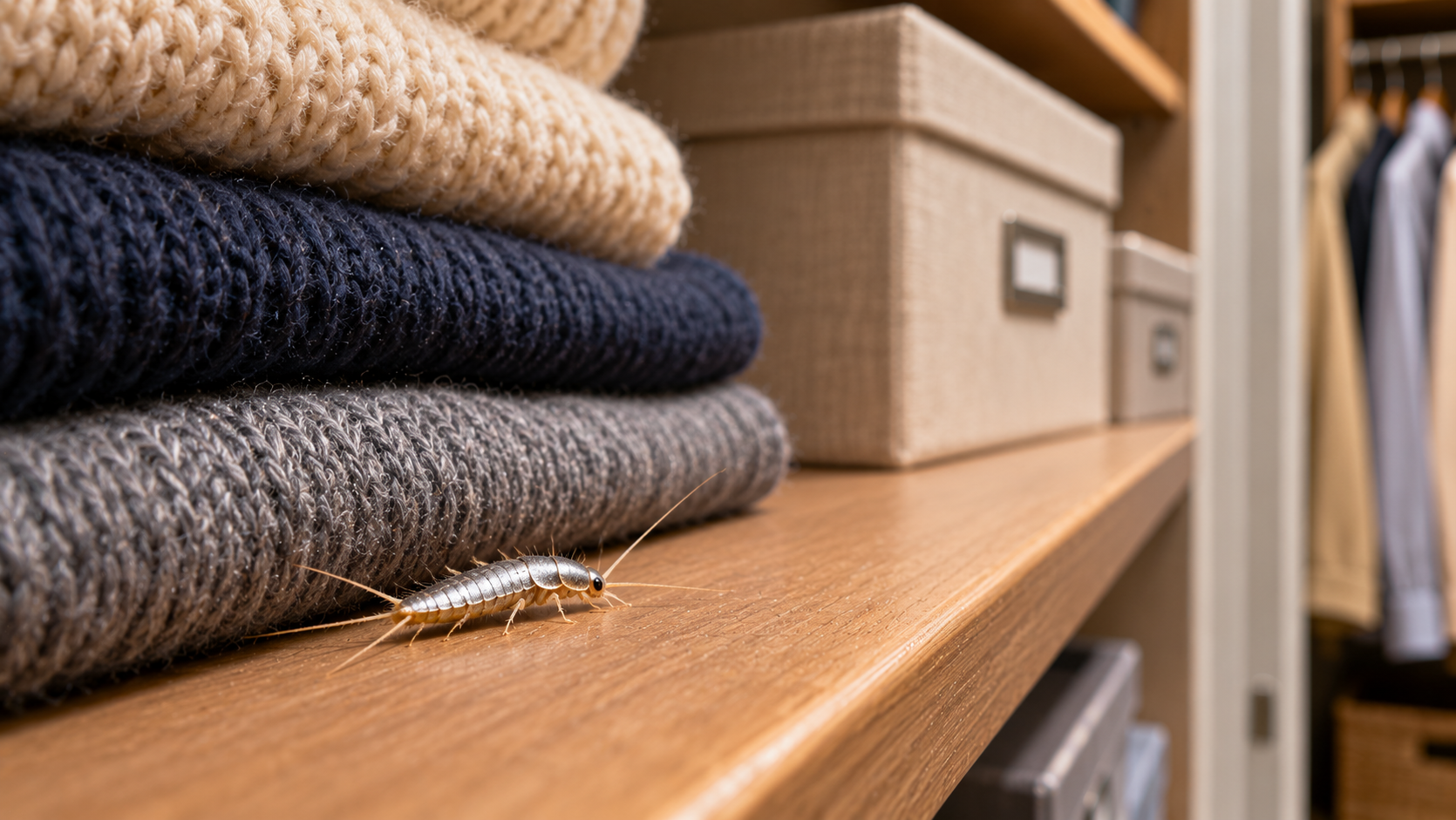
You reach into a storage box for a favorite sweater and notice a tiny, silver-colored insect racing beneath the folded fabric. The closet looks clean, so its presence seems puzzling. Silverfish, however, do not need a visibly messy room. They need protected spaces, suitable food materials, and enough moisture to remain active.
San Diego’s generally mild climate does not make every closet dry. A poorly ventilated storage room, nearby bathroom, or damp exterior wall can create a small pocket of humidity. Our technicians investigate those conditions and inspect the damaged items before choosing a silverfish control plan. Finding one insect is not proof of a major infestation, but recurring sightings deserve closer attention.

Why Quiet Storage Spaces Appeal to Silverfish
Silverfish are nocturnal insects that avoid light and squeeze into narrow gaps. Closets and seldom-used storage rooms are attractive because boxes and shelving offer cover, while paper and certain textiles provide potential food. Humidity can build up in corners that rarely receive airflow, even when the rest of a home feels comfortable.
We look for conditions such as:
- Poor circulation: Closets against exterior walls may hold damp air behind tightly packed belongings.
- Cardboard boxes: Paper packaging provides both hiding places and materials containing cellulose or starch.
- Adjacent plumbing: A slow leak beyond a wall can affect a cabinet or nearby storage area.
- Undisturbed shelving: Insects may remain unnoticed behind books, luggage, and seasonal decorations.
- Floor-level crevices: Baseboard joints and gaps beneath built-ins can connect sheltered spaces.
An insect seen in the open may have traveled from a crack rather than living among the clothes themselves. Our inspection considers the surrounding room instead of treating the sighting location as the entire problem.
Our article on moisture-related pest activity explains how persistent dampness can support several household pests. Silverfish are one example of why a moisture clue should be investigated instead of dismissed as an ordinary storage issue.
Recognizing Damage Before Valuable Items Are Affected
Silverfish feed on starchy materials and can damage paper, wallpaper adhesive, book bindings, and some fabrics. They may also feed on other organic material found indoors. The first visible problem is sometimes a damaged keepsake rather than a live insect. Still, holes in clothing or yellowish marks do not automatically identify silverfish; clothing moths, ordinary wear, and moisture damage can produce confusing evidence.
Warning signs worth documenting include:
- Small irregular holes: Paper edges or susceptible fabrics may show uneven feeding damage.
- Surface scraping: Books and documents may develop shallow worn-looking patches.
- Shed skins: Pale cast coverings can collect behind stored items and along shelf edges.
- Repeated sightings: Several insects over time suggest more activity than one accidental visitor.
- Affected neighbors: Damage across adjoining boxes may indicate a broader storage-area problem.
Preserving evidence matters. A photograph or safely contained specimen can help distinguish silverfish from firebrats and other fast-moving insects. If the material is valuable, avoid spraying it directly with household pesticide. A professional can assess the pest concern while a textile or paper specialist advises on preservation. Keep particularly valuable items documented while the source is investigated carefully.
Our guide to updating pest prevention describes how inspecting stored supplies, access points, and water sources helps uncover overlooked vulnerabilities. Those principles are useful even when the affected area is a small bedroom closet rather than a large attic.
Combining Targeted Treatment With Better Storage Conditions
Cleaning out every box may seem like the simplest answer, but moving belongings without checking for activity can spread evidence and make it harder to identify the source. We begin by confirming the insect and examining accessible cracks, baseboards, storage spaces, and nearby moisture conditions. Treatment then follows the findings and the property’s needs.
A coordinated approach may include:
- Identification: Confirming silverfish helps avoid treating the wrong species or source.
- Harborage inspection: We focus on concealed gaps and storage zones supported by evidence.
- Appropriate treatment: Targeted applications are selected according to the location and product label.
- Moisture correction: Ventilation improvements and plumbing repairs can reduce favorable conditions.
- Follow-up monitoring: Subsequent checks help determine whether activity has declined or continues elsewhere.
Our silverfish service includes an initial visit and continuing care when warranted. Since developing insects may remain concealed, later sightings are evaluated in context rather than treated as automatic proof that nothing worked. We also explain preparation and occupant precautions for any applications.
Secure containers can protect clean, dry papers and seasonal textiles, while open access to room edges makes future signs easier to spot. None of these changes guarantees that another insect will never appear. Together with professional assessment, however, they help make a closet less suitable for a persistent population.
Protect the Belongings You Have Put Away
If silverfish are appearing near books, clothing, or stored keepsakes, contact Major League Pest for an inspection. Our team can identify the activity, examine likely hiding places, and recommend suitable treatment and monitoring for your San Diego County home.
