
Roof rats are well adapted to San Diego County’s mild coastal climate. They climb trees, fences, vines, utility lines, and exterior surfaces, then use rooflines, attics, garages, and other elevated spaces for shelter. As summer ends, changing temperatures, shifting food sources, irrigation patterns, and coastal moisture can all influence where these rodents travel.
A rat infestation often develops because several conditions overlap. Fruit trees may provide food, dense landscaping can create cover, and small roofline gaps can give rats a direct path indoors. Professional inspection helps connect these factors so treatment focuses on the actual source of activity rather than only the places where droppings or noises are noticed.
Food, Water, And Shelter Keep Roof Rats Close
Roof rats are opportunistic feeders and may remain near homes where food is consistently available. Citrus, avocados, nuts, bird seed, pet food, garbage, and fallen fruit can all support activity. In coastal neighborhoods, irrigated landscapes and outdoor water sources can also make properties more attractive during dry stretches.
Conditions that can support roof rats include:
- Fruit or nuts left on trees or the ground
- Bird feeders, pet food, or unsecured trash near structures
- Dense shrubs, vines, and tree canopies touching roofs or fences
- Irrigation leaks, standing water, or other dependable moisture sources
- Woodpiles, storage areas, or debris that create protected shelter
These resources do not automatically mean rats are present, but they can make a property easier to use repeatedly. Once roof rats establish a dependable feeding and travel pattern, they may return to the same routes night after night.
Early action matters because pest problems spread when food, water, shelter, and access remain available. Reducing those conditions is most effective when it is paired with inspection and targeted rodent control.
Rooflines And Upper-Level Gaps Create Easy Access
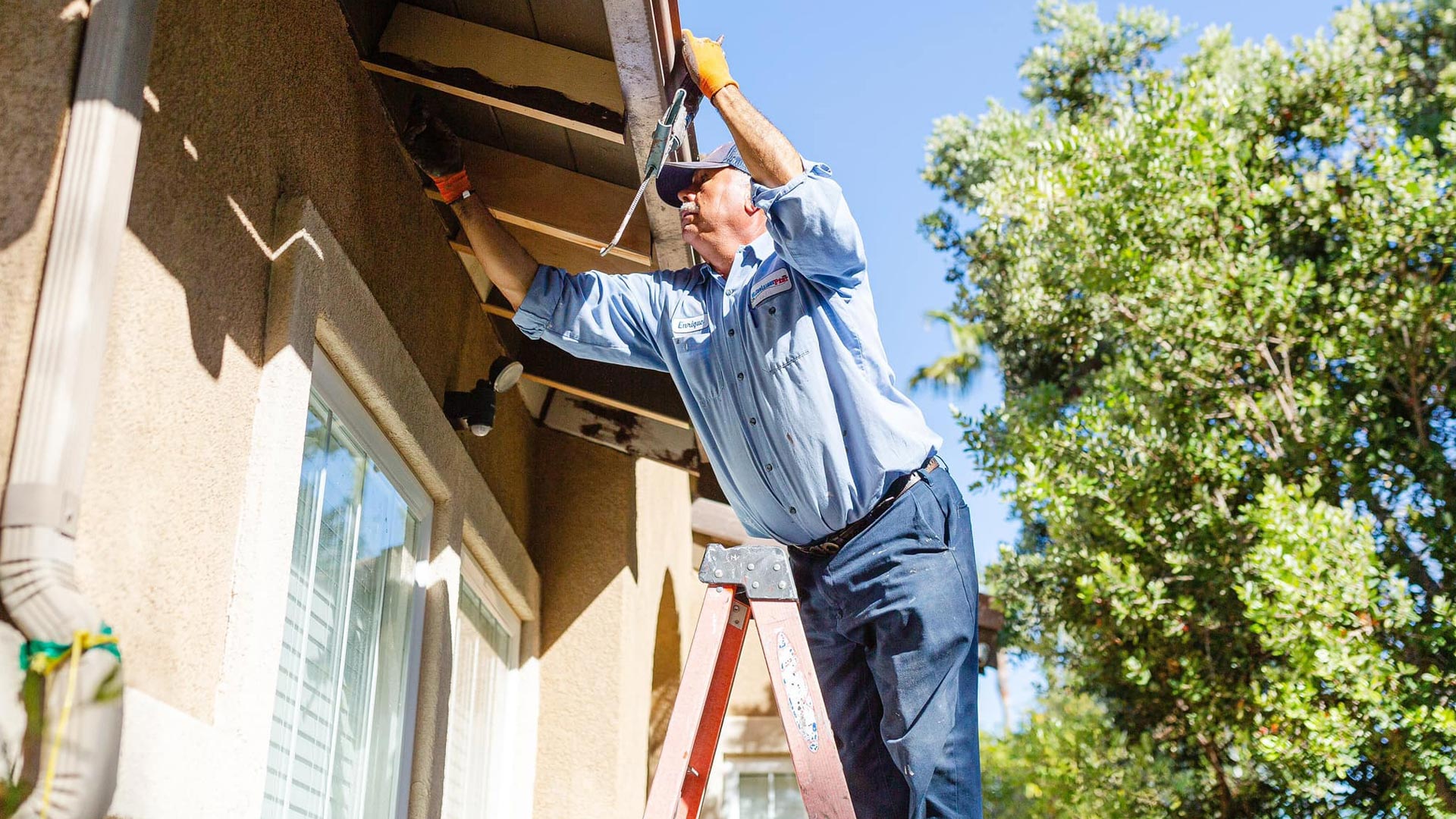
Roof rats are strong climbers, which makes upper parts of a home especially important during an inspection. Tree limbs, fences, vines, and utility lines can function like bridges to roofs, balconies, and attic vents. Small openings around eaves, fascia, vents, and roof intersections may then provide entry.
Common access points include:
- Damaged attic vents or unscreened openings near the roof
- Gaps where roof sections, eaves, or fascia meet
- Tree branches or vines extending directly toward the structure
- Utility lines or fences that connect to upper-level surfaces
- Garage-door gaps and openings around pipes, cables, or conduits
A scratching sound in the attic does not necessarily mean the entry point is directly above that room. Roof rats can enter on one side of a property and travel through attic or wall spaces before becoming noticeable elsewhere.
Professional exclusion is important because sealing the wrong opening at the wrong time can create new problems. Technicians first determine which routes are active, whether rodents are still inside, and where trapping or removal should occur before access points are closed.
Seasonal Changes Can Shift Rodent Pressure Toward Homes
San Diego’s coastal climate does not create the same severe winter conditions found in colder regions, but seasonal changes can still affect roof rat behavior. Cooler nights, late-summer dryness, reduced outdoor food, and changing irrigation may encourage rodents to spend more time near sheltered structures.
Professionals may watch for:
- Fresh droppings in attics, garages, or storage areas
- Gnaw marks on wood, wiring, food packaging, or stored materials
- Rub marks along beams, walls, or repeated travel routes
- Nesting material in insulation or other protected spaces
- Nighttime scratching, movement, or sounds above ceilings
Roof rats can invade throughout the year, but fall and winter often bring stronger pressure around homes. That makes late summer a useful time to identify vulnerabilities before rodents become more established indoors.
A broader rodent management plan also shows why trapping alone is not enough. Long-term control depends on connecting inspection, removal, exclusion, sanitation, landscaping, documentation, and follow-up.
Coastal properties can change quickly. Fruit ripens and drops, vegetation grows toward the roofline, irrigation leaks develop, and door or vent materials wear down. A route that was not active earlier in the year may become attractive later.
Professional monitoring helps confirm whether a rat infestation is declining or simply shifting to another part of the structure. Technicians can compare new droppings, trap activity, gnawing, and entry-point conditions with earlier findings, then adjust treatment if necessary.
The goal is not only to remove the rats already present. It is to make the home harder to access and less rewarding to revisit. That requires attention to rooflines, landscaping, food sources, moisture, and neighboring conditions rather than a one-time response to a single sighting. Late-summer inspections can also establish a useful baseline before fall, making fresh activity easier to distinguish from older evidence and helping homeowners understand whether exclusion, trapping, or continued monitoring should come next.
Keep Roof Rats From Settling In Before Fall
If you are hearing attic movement, finding droppings, or noticing signs of roof rats around your coastal home, contact Major League Pest for professional inspection, removal, exclusion, and long-term rodent control.
