
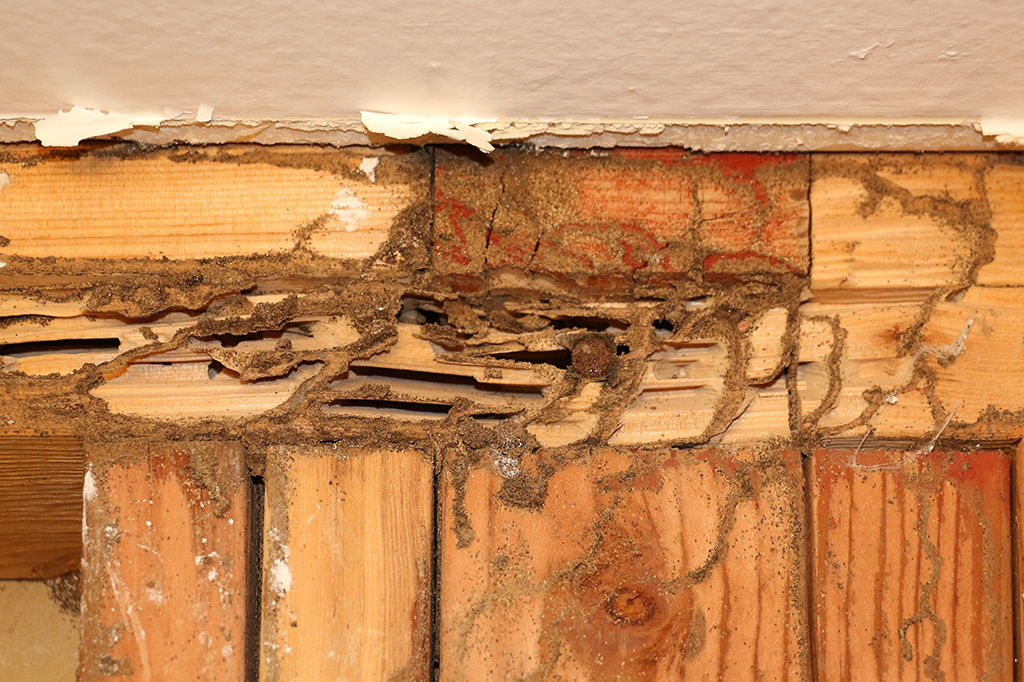
Termites can damage a home for months or years before obvious signs appear. The danger is not only how much wood they consume, but also how different species live, travel, and remain concealed.
Subterranean and drywood termites are both serious structural threats, yet they behave differently. Effective termite control begins with accurate identification.
Subterranean Termites Attack From Below
Subterranean termites live in soil and depend on moisture to survive. They typically reach buildings through the ground, foundation gaps, plumbing penetrations, or wood-to-soil contact. Mud tubes protect them as they travel between the colony and a food source.
Warning signs may include:
- Mud tubes along foundations, crawl spaces, garages, or patios.
- Soft, blistered, or hollow-sounding wood near structural areas.
- Swarmers or discarded wings around windows and doors.
- Moisture problems near foundations, plumbing, or drainage zones.
- Damage that begins near ground level and spreads upward.
The hidden danger is scale. A subterranean colony may sit well away from the structure while workers keep traveling through concealed routes. Surface damage can therefore represent only a small part of the activity.
Professional inspections focus on soil conditions, moisture, entry points, and structural evidence.
Drywood Termites Live Inside the Wood
Drywood termites do not require soil contact. Colonies can live entirely inside structural wood, including attic framing, roof eaves, decks, patio covers, trim, furniture, and other wooden components. Because their galleries remain concealed, infestations may spread without mud tubes or obvious ground-level evidence.
Small piles of dry pellets, known as frass, are a common clue. Discarded wings, blistered surfaces, and hollow-sounding wood can also signal activity.
This ability to remain sealed inside wood is one reason DIY termite limits matter. Treating only visible insects or surface damage may fail to reach galleries hidden inside framing, walls, flooring, or other inaccessible areas.
Drywood termite control may involve localized treatment, heat treatment, or fumigation, depending on the infestation.
Why Misidentification Can Leave Infestations Active
Subterranean and drywood termites may both damage wood, but their biology requires different treatment strategies. Applying the wrong method can delay control while the infestation continues behind walls, below floors, or inside timber.
Important differences include:
- Habitat, because subterranean termites depend on soil, while drywood termites live within wood.
- Moisture needs because subterranean colonies require regular moisture access.
- Travel patterns because subterranean termites build mud tubes while drywood termites remain inside wooden galleries.
- Colony structure, because subterranean populations may be much larger and extend beyond the building.
- Treatment needs because soil barriers, localized applications, heat, fumigation, and monitoring serve different purposes.
A technician may examine foundations and crawl spaces for subterranean evidence while checking attics, eaves, fascia, decks, and interior wood for drywood activity.
This species-specific approach makes termite control more precise and reduces the risk of treating the wrong location.
Hidden Damage Can Change the Treatment Timeline
Termite treatment is not measured only by how quickly a product can be applied. Species, infestation size, accessibility, structural impact, environmental conditions, and treatment method all influence how long the process takes.
A small, localized drywood infestation may require a different timeline than widespread activity across multiple structural areas. Subterranean termites may require soil treatment, baiting, wood treatment, or monitoring, while severe drywood infestations may call for fumigation or heat.
This overview of termite treatment timelines explains why complete elimination can take time, especially when termites occupy hidden galleries, foundations, crawl spaces, or inaccessible wood.
A thorough plan may consider:
- The termite species and colony behavior are involved.
- The number and location of affected structural areas.
- Whether treatment can directly reach active galleries.
- Moisture or soil conditions that continue supporting activity.
- Follow-up inspections needed to confirm long-term results.
The goal is to choose a treatment that matches the actual infestation and reaches where termites live.
Long-Term Termite Control Starts With Inspection
The greatest danger from both subterranean and drywood termites is their ability to stay hidden while damage progresses. One species may travel from underground colonies through mud tubes, while the other can remain sealed inside wood without touching soil.
A complete termite control plan starts by determining which species is present, where activity is concentrated, and what conditions support it. Professionals may inspect foundations, crawl spaces, garages, patios, attics, roof eaves, decks, trim, plumbing areas, and other vulnerable zones.
The most appropriate response may involve localized treatment, soil treatment, baiting, heat, fumigation, wood treatment, or monitoring. No single method is right for every property.
Regular inspections also matter after treatment. New moisture problems, structural changes, or fresh termite pressure can create future risks.
Recognizing the difference between subterranean and drywood termites helps explain why professional identification matters. What appears to be a small patch of damage may connect to a much larger hidden problem.
Do Not Let Hidden Colonies Set the Pace
When termite signs appear, early identification can help limit further structural damage and guide the right response. Contact Major League Pest for professional termite control based on careful inspection, species identification, and long-term protection.
