
HOA communities bring many homes, shared landscapes, parking areas, trash stations, recreational spaces, and building exteriors into one connected environment. That makes pest activity a community-wide concern.
In North San Diego County, ants, cockroaches, fleas, mosquitoes, spiders, termites, rodents, roof rats, gophers, ground squirrels, bees, crickets, earwigs, silverfish, and snails can all create different pressures around managed properties. Effective pest control gives boards and property managers a structured way to identify activity, reduce attractants, coordinate treatment, and communicate with residents before small problems spread across multiple units or common areas.
Routine Inspections Catch Problems Before They Spread
Recurring inspections give property managers a clearer picture of where pest activity is developing. Shared landscaping, utility areas, dumpsters, rooflines, attics, and garages can connect several buildings, so one overlooked condition may affect more than one household.
A routine program can help identify:
- Ant trails moving between landscaped areas and structures
- Rodent signs around garages, dumpsters, roofs, or utility spaces
- Cockroach activity near trash, drains, or moisture sources
- Termite evidence around structural wood and shared buildings
- Gopher or ground-squirrel activity affecting lawns and common areas
- Spider, flea, mosquito, or stinging-insect pressure near gathering spaces
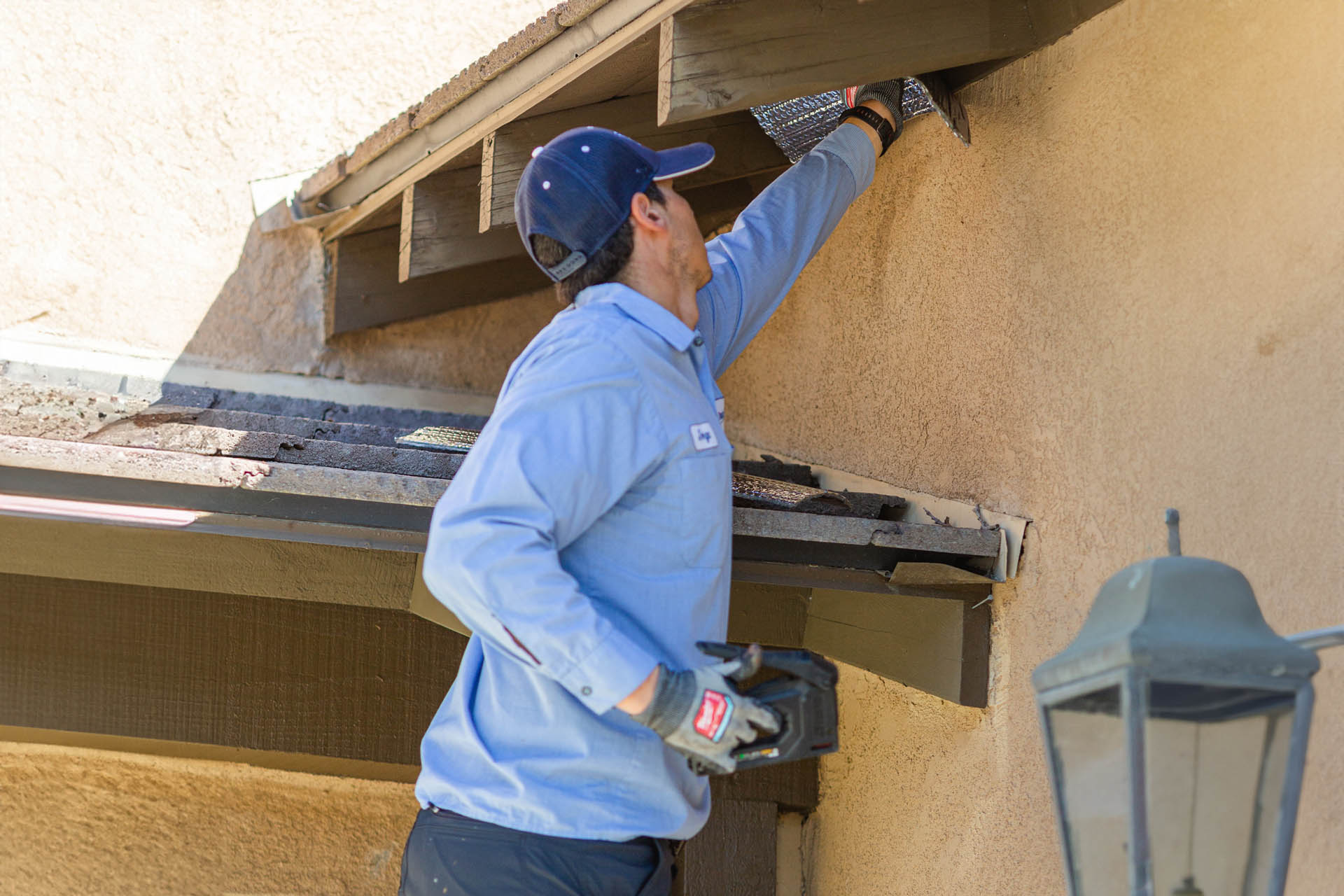
Attics deserve particular attention in multi-unit properties because damaged or disturbed insulation can conceal droppings, nesting material, moisture, and hidden access. Understanding attic pest evidence helps explain why roofline and insulation checks can support broader community pest management.
Shared Conditions Require Coordinated Pest Control
Pests do not recognize property lines between adjoining units. Ant colonies can forage across several yards, rodents can move through connected rooflines or utility routes, and cockroaches may follow food and moisture between shared structural areas.
That makes isolated responses less efficient when the underlying source sits in a common area. An HOA pest-management plan can connect exterior treatment, exclusion recommendations, sanitation, landscaping, and resident communication so everyone is working from the same information.
Professional coordination is especially useful when responsibilities are divided between residents, vendors, and the association. A technician can document where activity originates, which areas need treatment, and which maintenance conditions should be corrected. This gives property managers a clearer basis for scheduling repairs, landscape work, or follow-up service.
Landscaping And Waste Areas Need Consistent Attention
Community landscaping and waste stations can strongly influence pest pressure. Irrigation, dense plants, food residue, overflowing trash, stored materials, and gaps around buildings may provide shelter or resources close to residential structures.
Important management priorities include:
- Keeping dumpsters closed and surrounding areas reasonably clean
- Trimming vegetation away from walls, roofs, and utility access
- Correcting irrigation leaks and persistent foundation moisture
- Removing landscape debris that creates pest harborage
- Monitoring common lawns for gophers and ground squirrels
- Sealing confirmed structural openings when exclusion is appropriate
These measures reduce conditions that keep attracting new activity. They also make inspections more useful by keeping foundation lines, exterior walls, and high-risk zones visible.
HOA boards benefit from treating these items as recurring maintenance rather than waiting until residents report a larger infestation.
Low-Impact Treatment Helps Keep Community Service Focused
Managed communities require treatment strategies that account for residents, pets, shared spaces, landscaping, and frequent foot traffic. Broad applications without a clear reason can create unnecessary disruption while missing the actual source of pest activity.
A low-impact approach uses pest identification, nesting or travel patterns, moisture, food sources, entry points, and seasonal conditions to determine where treatment belongs. Targeted placement can reduce unnecessary product use while keeping service focused on active zones.
This approach also works well with Integrated Pest Management. Prevention, exclusion, sanitation, landscape corrections, monitoring, and treatment become parts of the same plan. For an HOA, that means service decisions can be based on documented conditions rather than repeating the same treatment across every building regardless of need.
Long-Term HOA Programs Improve Consistency And Communication
Community pest management becomes more reliable when inspections, prevention, treatment, and follow-up follow a predictable schedule. Residents know where to report concerns, property managers gain better documentation, and technicians can compare changes from one visit to the next.
A long-term HOA plan may include:
- Scheduling routine service for common pest concerns
- Conducting periodic termite inspections for shared structures
- Tracking recurring rodent, ant, or cockroach activity
- Providing residents with practical prevention guidance
- Adjusting treatments as weather and landscaping conditions change
- Documenting follow-up recommendations for boards and managers
Consistent communication is especially important when an issue affects several homes or requires cooperation from residents. Clear guidance about food storage, clutter, pet areas, access, or preparation can prevent one untreated condition from undermining community-wide progress.
North San Diego County HOAs benefit most when pest management is viewed as an ongoing property-care responsibility. A coordinated professional program can protect shared spaces, reduce repeat complaints, and keep treatment focused on the pests and conditions actually present.
Keep Community Pest Management Organized
For HOA pest control built around routine inspections, Integrated Pest Management, targeted treatments, resident guidance, and long-term follow-up, contact Major League Pest for professional support across North San Diego County.
