EXCELLENT 800+ reviews

Termite Control Santee, CA

From Santee Lakes to Mission Gorge, termite clues can hide in fences, eaves, patio covers, and slabs. Major League Pest proudly brings over 30 years of combined field experience when it comes to termite removal.

Contact Us For Details

Name
River Lots. Careful Wood Work.

Detailed Termite Control Santee, CA For River, Lake, And Hillside Properties

Santee termite work needs more than a flashlight pass. Heat, irrigation, the San Diego River corridor, older tract homes, patio covers, fences, and garage framing can all complicate what damage means. Major League Pest has over 30 years of overall experience, with seasoned fumigation, termite, inspection, construction, and repair knowledge guiding the call.
Wood Damage Needs Proof.

Termite Services For Santee Homes That Need Straight Answers

Termite control Santee, CA, service should identify the species, read the wood, and match the method to what the structure shows.

Careful Wood Inspection

We check fascia, eaves, patio covers, baseboards, garages, attic wood, fences, pellets, wings, tubes, moisture, and slab edges.

Focused Termite Treatment

When activity sits in one workable zone, we treat that area directly and avoid making the job larger than needed.

Whole-Home Fumigation

When drywood termites spread beyond practical spot work, fumigation can reach hidden galleries. We explain prep, timing, and clearance.

Soil And Foundation Defense

Subterranean termites move from the ground. Our termite control Santee professionals inspect slab edges, soil routes, tubes, damp areas, and hidden wood contact.

Strategic Bait Placement

Baiting can help when subterranean pressure fits the soil, structure, and termite movement. Placement and monitoring matter.

Repair And Wood Preservation

Damaged wood should be handled with judgment. We repair affected materials and help preserve strength after termite control.


Customer Stories Hold Weight.

Actual Feedback From Major League Pest Customers

Based on 800+ Reviews
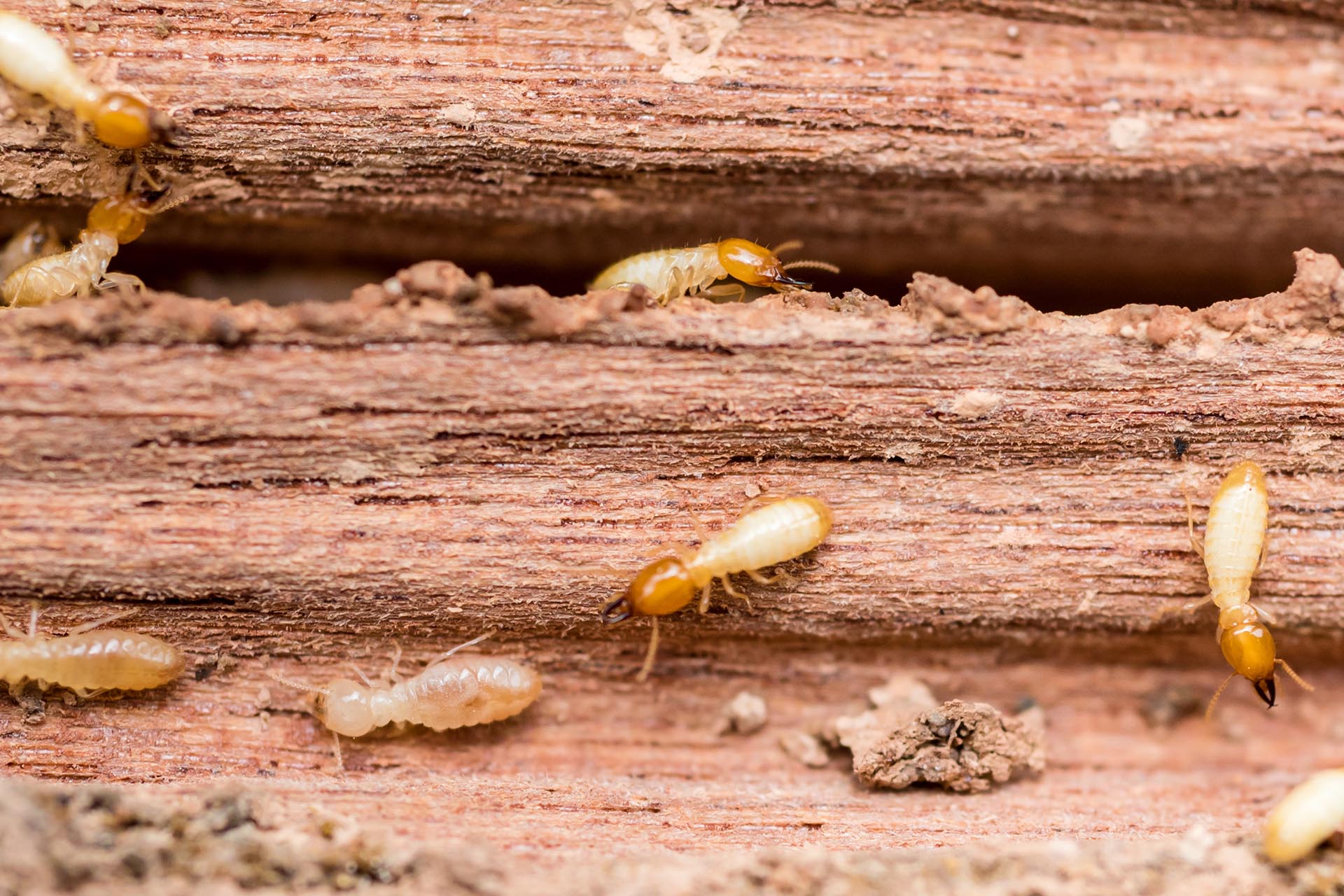
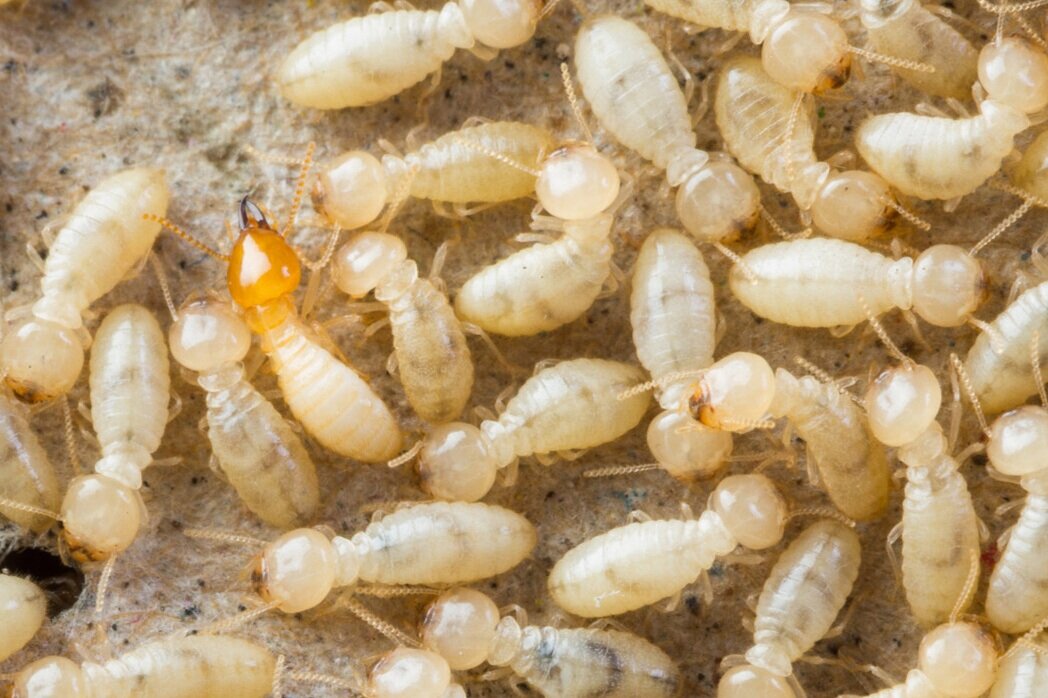
Close-up image of termites crawling through and damaging a piece of wood.
Every Board Gets Context.

Santee Termite Inspections With A Structure-First Mindset

A Santee termite control inspection should slow down near the places homeowners usually pass without thinking: patio beams, garage trim, fence posts, attic framing, baseboards, balcony wood, exterior doors, and shaded corners near irrigation. Termites often leave small clues before a board feels weak.

Homes near Mast Park, Santee Lakes, Carlton Hills, and Town Center can show different patterns. Drywood termites may stay inside lumber. Subterranean termites may rise from soil routes. Dampwood termites often point to moisture, so our inspection separates the clues before treatment.

Santee Termite Exterminator With Repair Know-How

5.0 Google Rating

Family Owned

Service Guarantee

Species First. Method Second.

Termite Control and Treatments

The termite type decides the plan. Our termite control specialists check evidence first, then choose treatment, fumigation, baiting, barrier work, or repair. 

Dampwood Termite Control

Dampwood termites usually mean wet wood is part of the story. We check leaks, shaded beams, soil contact, decay, and irrigation before recommending correction.
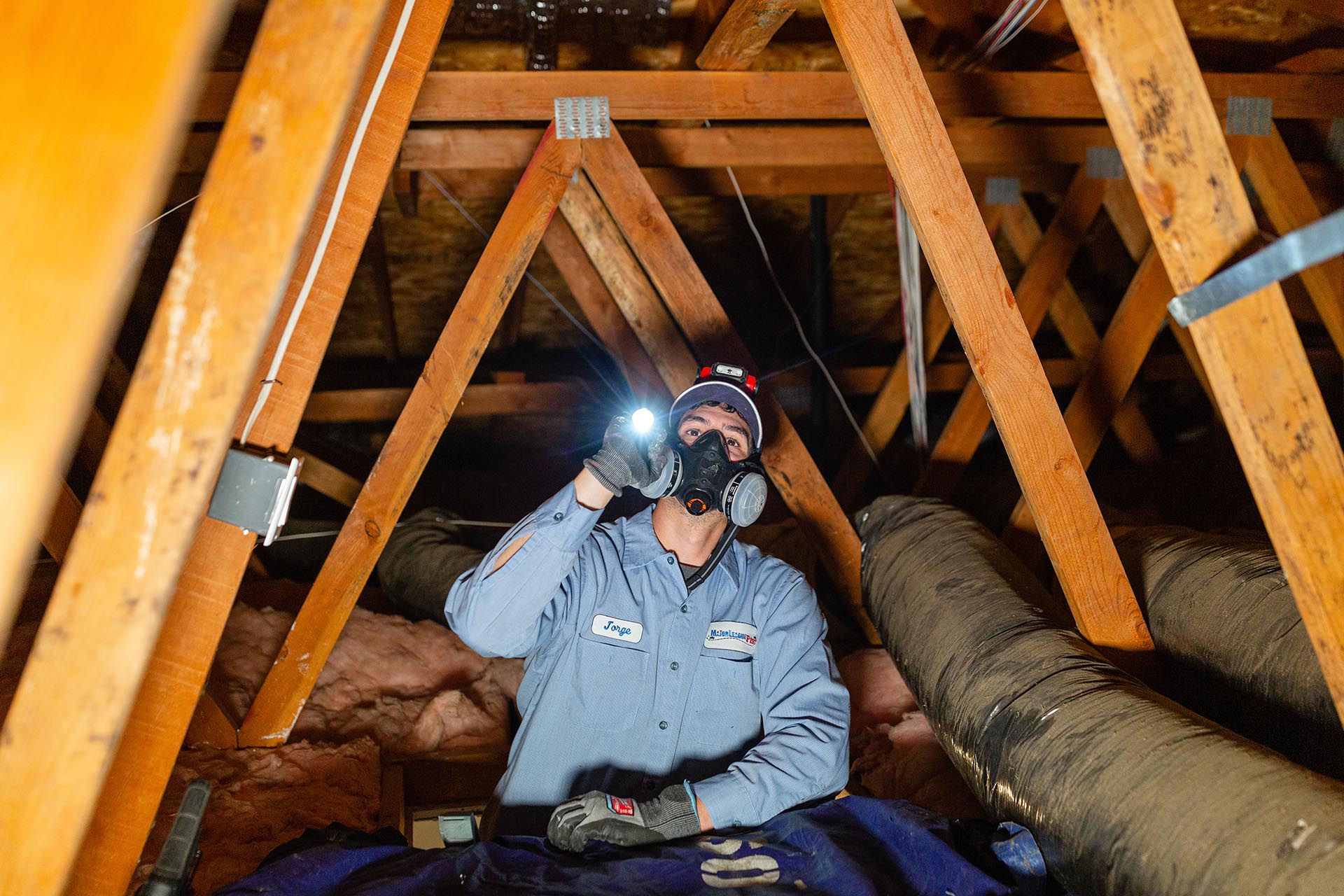
Pest control technician inspecting a residential attic with a flashlight while wearing a protective mask and uniform.

Drywood Termite Fumigation

Drywood termites can live inside clean, dry lumber without touching soil. If colonies are widespread, fumigation may reach places drilling cannot.
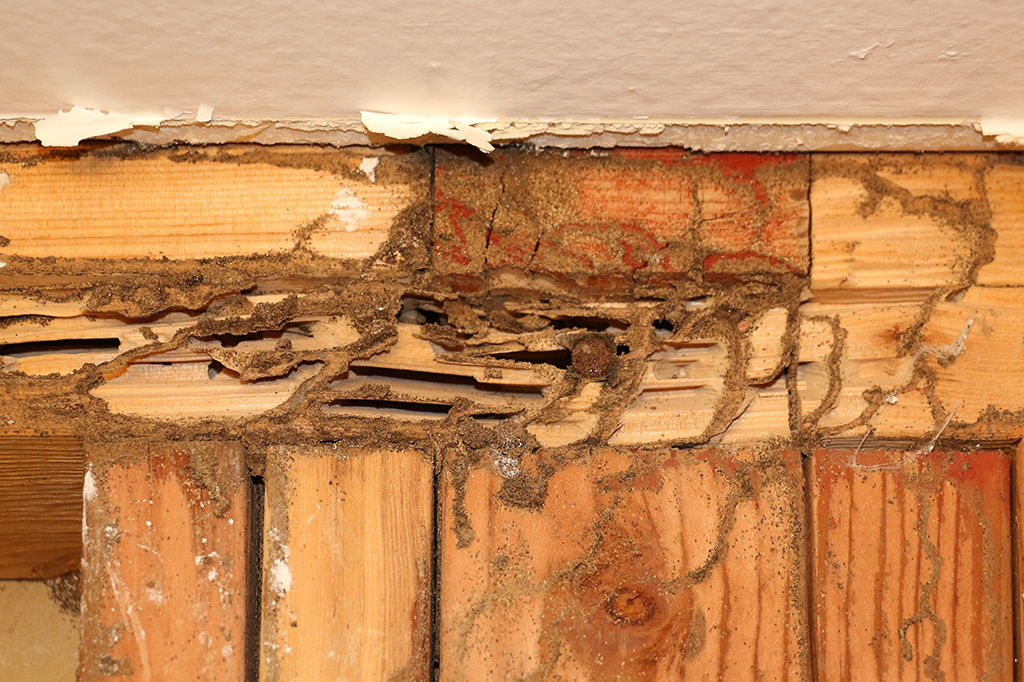
Severely damaged wooden wall structure showing visible signs of termite infestation and tunneling beneath a layer of drywall.

Subterranean Termite Care

Subterranean termites need soil access as well as protected routes. Our termite expert looks for shelter tubes, slab cracks, damp edges, foundations, and hidden wood contact.

Why Santee Trusts Major League Pest

  • Deep Bench Of Termite Knowledge. Santee homeowners get more than one narrow viewpoint. Our termite, fumigation, inspection, construction, and repair experience helps sort complicated wood findings with practical judgment.
  • Built For East County Heat. Hot inland days, irrigation habits, dry lumber, and river-adjacent moisture can all affect termite pressure. We read those local conditions before choosing treatment.
  • Repair Skill After Discovery. Finding termites is only half the job. Our wood repair background helps customers understand what needs replacement, preservation, or closer review after treatment.
  • Clear Options Before Commitment. Our termite control exterminator explains whether a home needs inspection, local treatment, fumigation, baiting, barrier work, or repairs. Customers should know why a recommendation fits.
  • Useful For Escrow And Home Planning. Santee buyers, sellers, and long-time owners often need straight termite answers. We help organize findings, timing, repairs, and treatment choices without unnecessary confusion.
Frequently asked questions

Termite Control FAQs

Are drywood termites common around Santee homes?

Yes. UC IPM notes that drywood termites are common across Southern California, and they can live inside dry lumber without soil contact. Around Santee, eaves, fascia, patio covers, fences, and attic framing can hide activity until pellets, wings, or damaged wood appear.

The San Diego River area, irrigation, shaded yards, and nearby landscape moisture can change what inspectors look for. Moisture does not create every termite problem, but it can support dampwood concerns, wood decay, and subterranean termite routes near soil, slabs, and exterior wood.

No. A few signs in one beam, trim piece, or patio cover do not automatically mean the whole house needs fumigation. Our local exterminators look at the termite type, how far the activity reaches, and whether a smaller treatment can truly handle it. 

Yes. Major League Pest has termite and dry rot repair experience for homes where damaged wood needs more than treatment. We can review affected areas, explain practical repair needs, and help protect the structure after termite activity is controlled.

Subterranean termites usually work up from the soil, often using mud tubes to stay protected. Drywood termites can stay inside above-ground wood and may leave tiny pellets behind. That is why we check the evidence first before choosing treatment. 

Start with wood that meets weather, soil, or moisture: patio covers, fence posts, garage trim, fascia, door frames, deck pieces, attic framing, and slab edges. A professional inspection can separate old damage from active termite clues more reliably.

Yes. Our termite control company offers termite inspections and can review visible evidence before treatment is planned. That matters because pellets, wings, damaged trim, soft wood, or mud tubes can point to different termite types and different levels of concern.

Call when you notice pellets, wings, mud tubes, bubbling paint, soft trim, hollow wood, or new damage around exterior wood. Waiting can make the repair side harder, especially if termites are already moving through hidden areas.

Call Before Termites Claim More Wood.

Book Your Santee Termite Inspection Today!

Major League Pest can inspect the clues, explain the risk, and recommend the right next step.