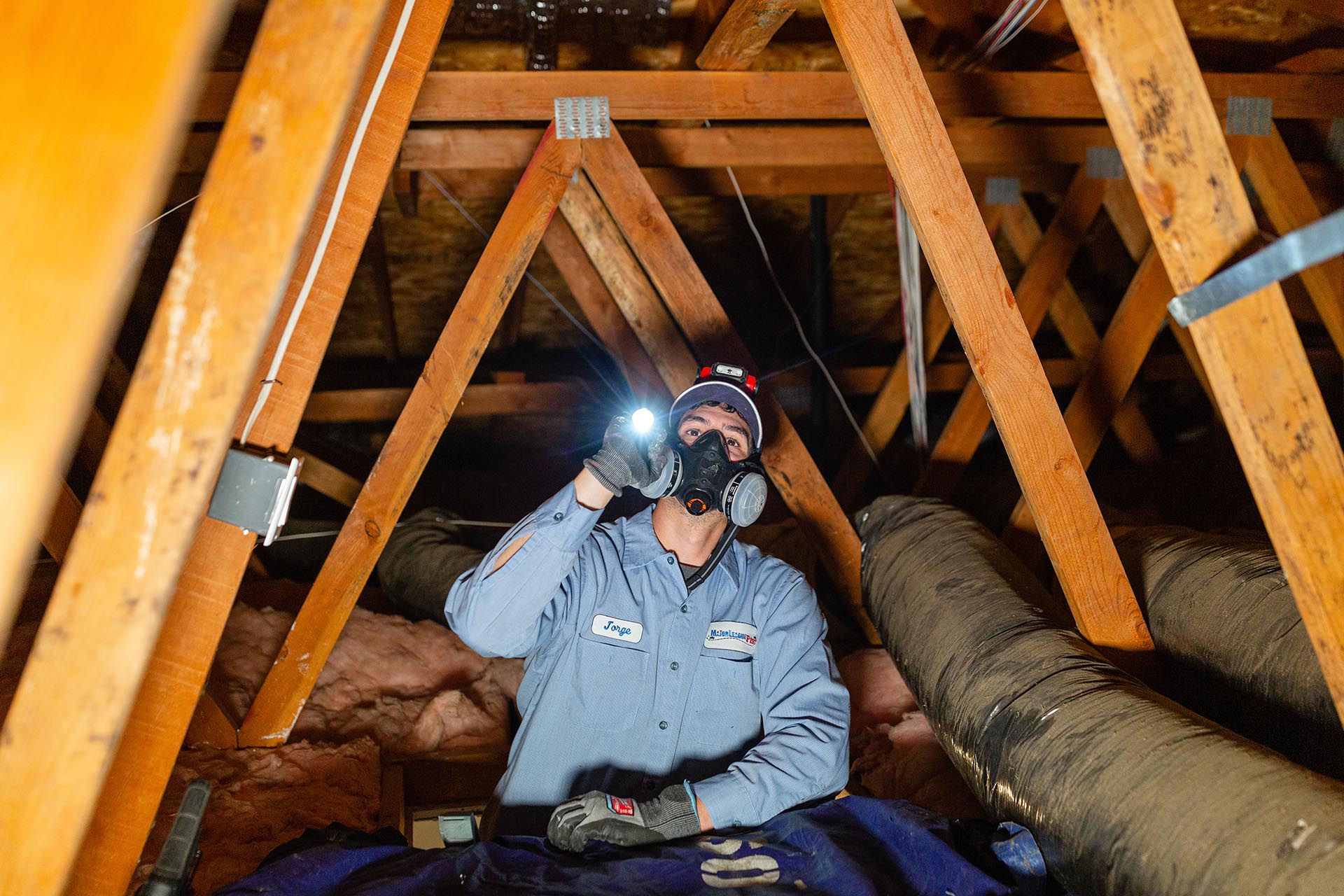
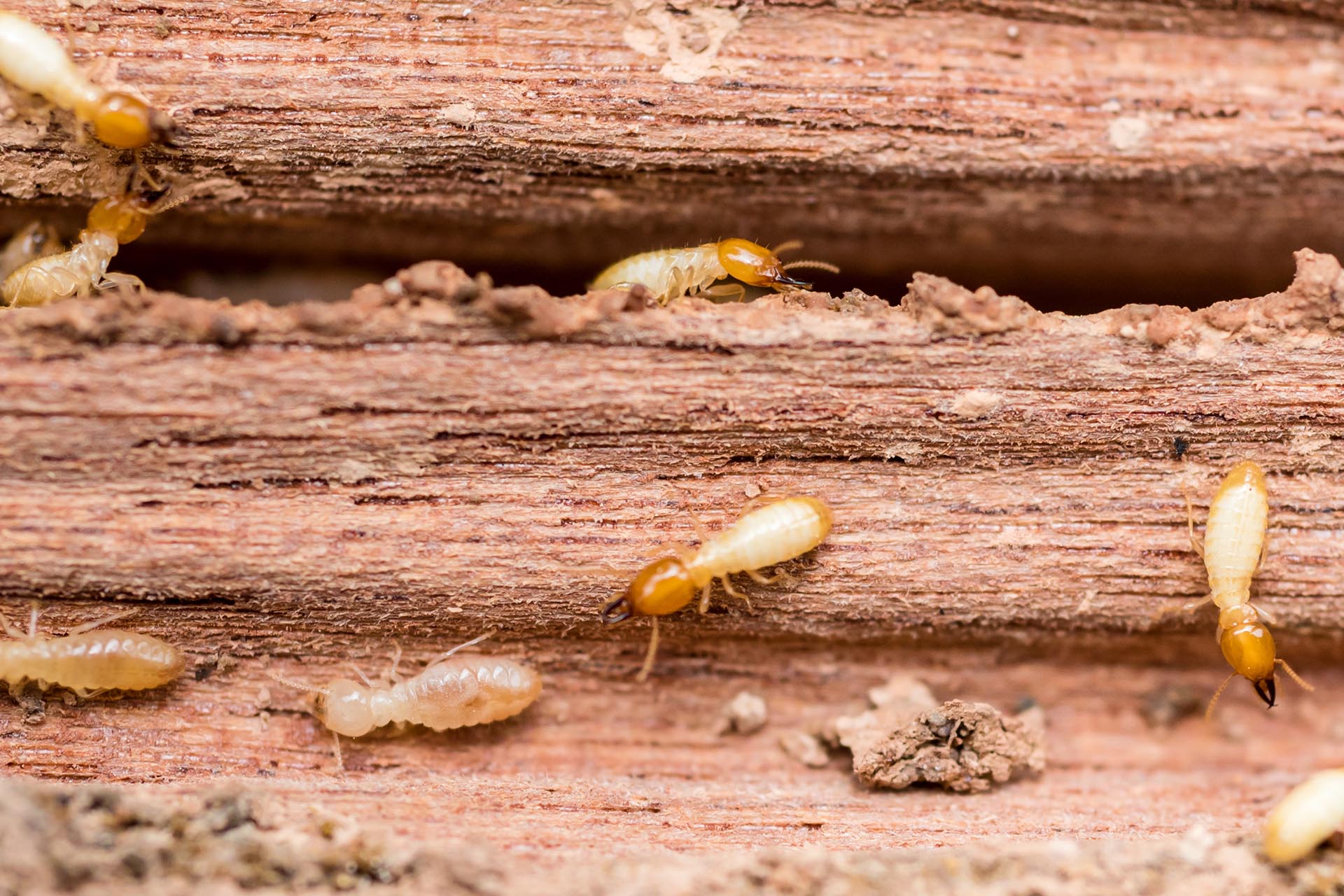
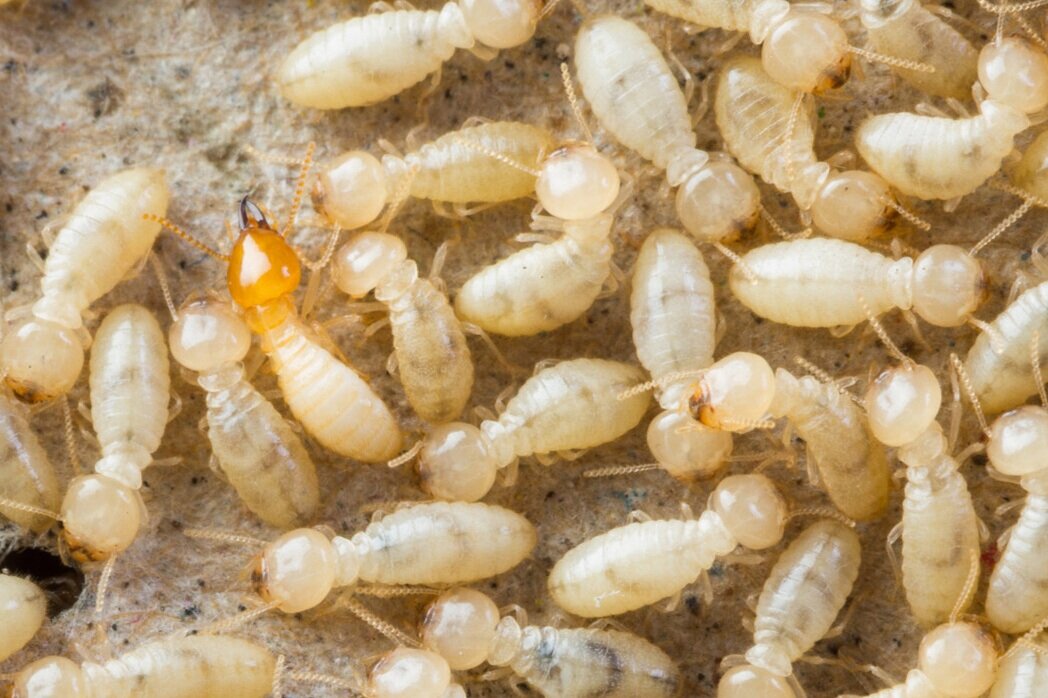
Decades of fieldwork have taught our team that termite damage rarely starts where homeowners notice it. Inspectors follow softened grain and moisture changes through reachable wood instead of stopping at obvious damage.
That trail reveals how far the colony traveled and gives each recommendation a reason rooted in the property.
Our termite services connect inspection findings to a suitable treatment method, preparation plan, repair scope, and follow-up recommendation for owners.

We look where termites actually turn up: framing, eaves, attics, garages, fences, patio covers, and foundation edges with suspicious moisture.

A localized application makes sense when one reachable drywood colony is confirmed. It handles that spot without involving unaffected rooms.

Fumigation may fit when drywood termites are scattered through hidden framing. It covers areas that localized work simply cannot access.

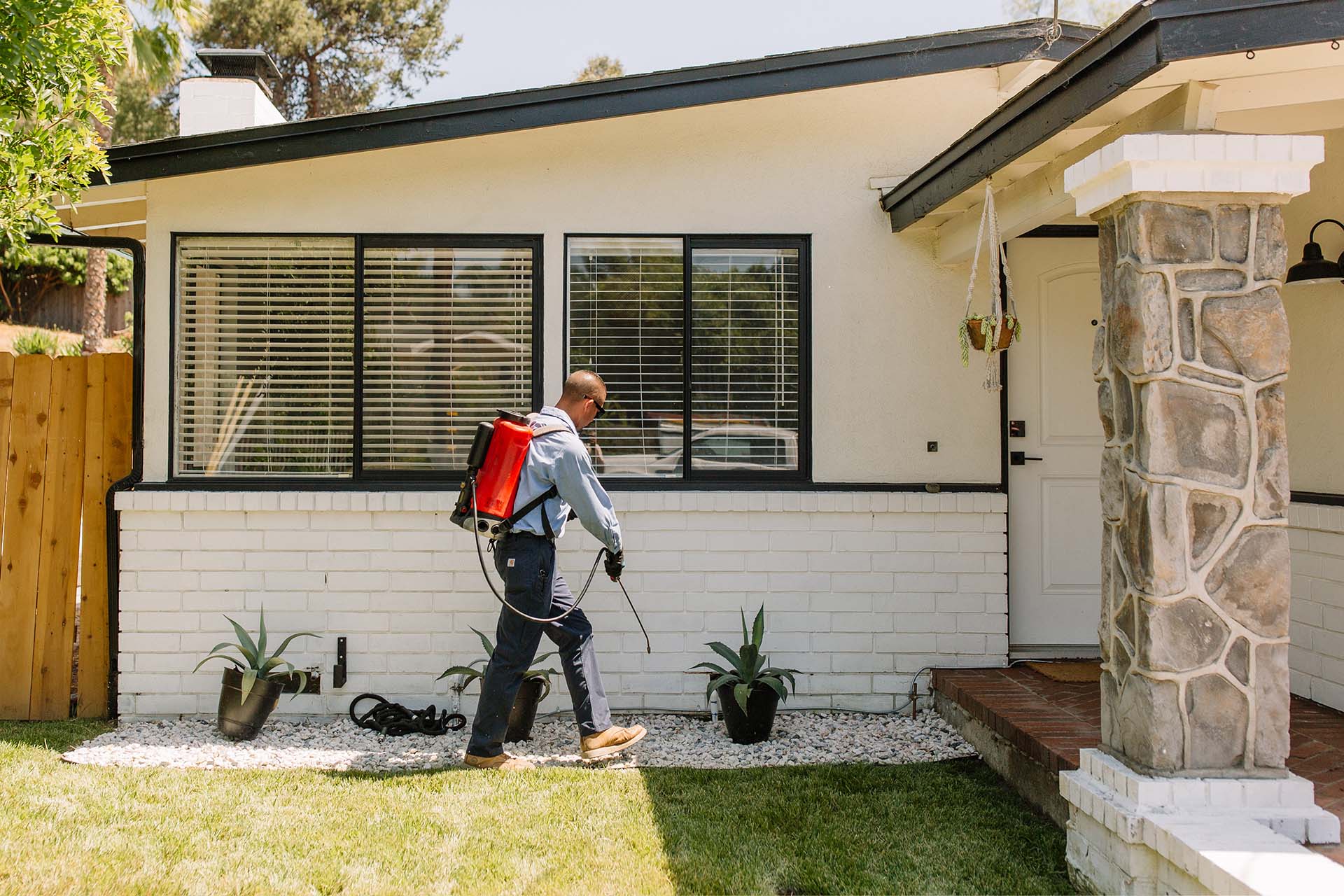
Subterranean termites travel from soil toward foundations. A barrier interrupts those routes during Carmel Valley pest control and limits access.

Bait stations take patience. Scheduled checks reveal feeding, colony pressure, station condition, and whether subterranean termites are still moving nearby.

Finding termites is only half the job. Our termite expert replaces approved damaged wood and repairs documented rot without another contractor.


Enrique, Alex and Daniel did an excellent job repairing the fascia and shade structure that were damaged by termites and dry rot.


So far, it's been a 5 star experience. Dan is extremely knowledgeable and friendly. I really feel like they focus on your needs and don't try to up sale on unnecessary service. I would highly recommend Major League Pest to anyone in the area.


I’ve had a fantastic experience with Major League Pest Control for years! My technician, Tony, is absolutely the best—professional, knowledgeable, and always goes above and beyond.


Working with Paul was a complete breath of fresh air. I completely trust him as he went above and beyond to show me exactly what was going on and not try to oversell me on any treatment.
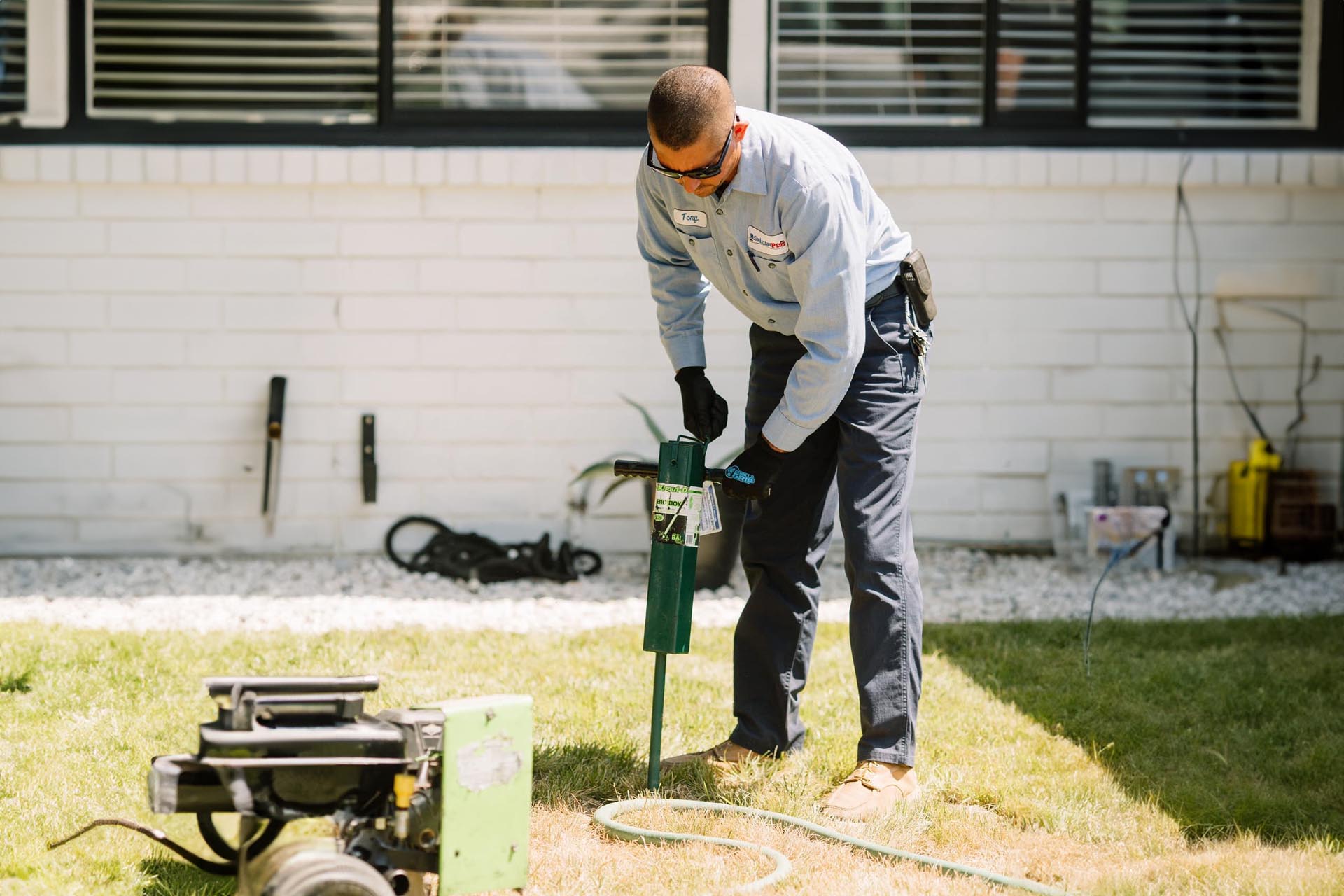
Shared walls turn a termite problem into a group project, whether anyone likes it or not. For condominiums and townhomes, pest extermination services may involve owners, tenants, managers, and an HOA before work starts.
We document where termites appeared, flag common framing, arrange access, and put schedules and return instructions in writing. If repairs enter the picture, responsibilities are spelled out before boards come down. That preparation keeps inspections, approvals, repairs, and pest removal from becoming a long chain of crossed messages between busy people.
Termites set the rules. Their species, location, spread, and moisture tell us whether fumigation, baiting, or localized work makes sense.

Dampwood termites usually point to a moisture story. We inspect wet framing, trace leaks or drainage problems, handle reachable colonies, and identify boards that may need authorized replacement once the source of dampness is corrected.

Drywood termites can stay inside lumber for a long time without obvious surface damage. They do not rely on soil, either. When activity turns up in several concealed areas, fumigation may be the better fit because localized methods cannot always reach every colony.
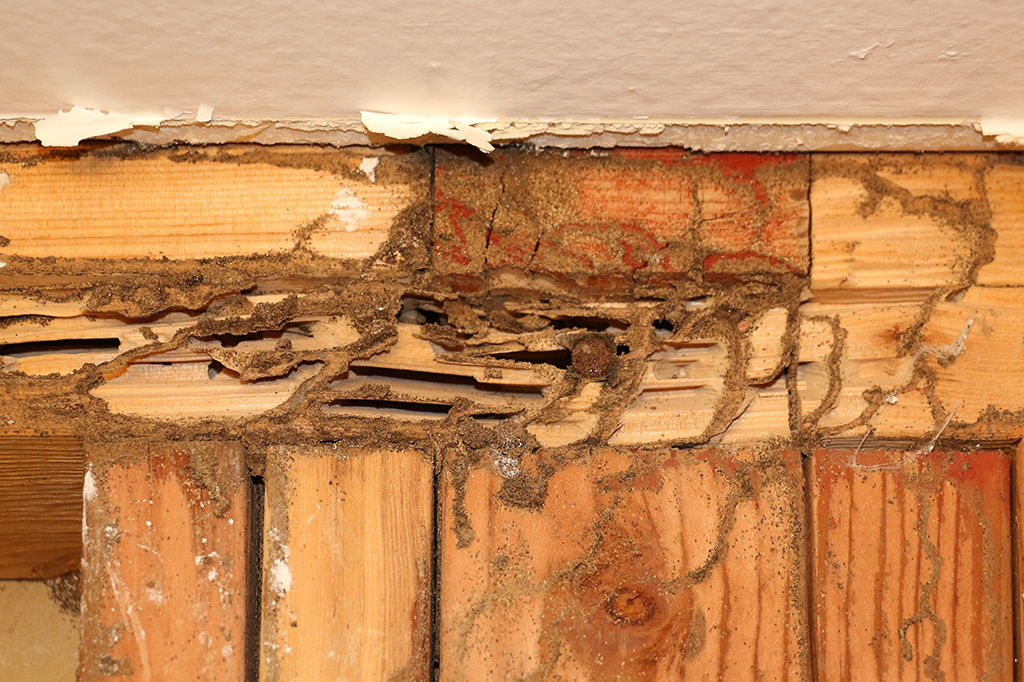
Subterranean termites enter from below, often following cracks, pipes, or wood touching soil. Our local exterminators check for mud tubes and moisture before carefully comparing bait stations, foundation barriers, entry applications, and ongoing monitoring plans.
Report discarded wings, drywood pellets, mud tubes, kickout holes, blistered surfaces, hollow-sounding wood, or unexplained damage. Major League Pest determines whether termites caused the evidence before recommending work. Flying ants can resemble swarmers, so identification helps define the inspection area, treatment method, preparation requirements, and possible wood-repair scope for the Carmel Valley property.
Yes. We’ll inspect the wood and other reachable areas, point out anything suspicious, and explain what we can and cannot confirm. If you also need pest control for indoor and outdoor spaces, we’ll say whether that calls for separate work instead of quietly folding it into the termite appointment itself.
We do not start with a favorite method. First, we identify the termite, find where it is living, check how far it has traveled, and look for damp or damaged wood. Those details tell us whether spot work, heat, borates, baiting, soil barriers, fumigation, repairs, or a combination makes sense.
No. A small, reachable drywood colony may be handled with focused work or heat. Fumigation becomes worth discussing when colonies are widespread or tucked inside inaccessible wood. Subterranean termites need different methods altogether. A trustworthy pest control company should show you the evidence and explain why its recommendation makes sense.
Yes. When termites leave wood too damaged to keep, the affected sections can be removed and rebuilt. We also check nearby lumber for dry rot or fungal decay before carpentry begins. Keeping the termite work and repairs together gives Carmel Valley homeowners one team handling the job from start to finish.
Warm weather can bring winged termites out with little warning. Drywood swarmers are more common in summer and fall, while subterranean species may fly after seasonal rain. Our pest control specialists compare body shape, wings, weather, and the exact discovery spot before deciding whether the insects came from the property.
No two termite problems land the same way. One house might need work in a single piece of trim, while another has colonies scattered through hidden framing. Price follows the species, access, property size, damaged wood, and chosen method. The written estimate should spell everything out before anyone signs off.
Children and pets may need to stay out of certain areas during termite service. Before work begins, we explain what to move, cover, or remove, including bowls, toys, aquariums, and enclosures. Our pet-safe pest control guidance also covers reentry timing, so families in Carmel Valley know when spaces are ready.