
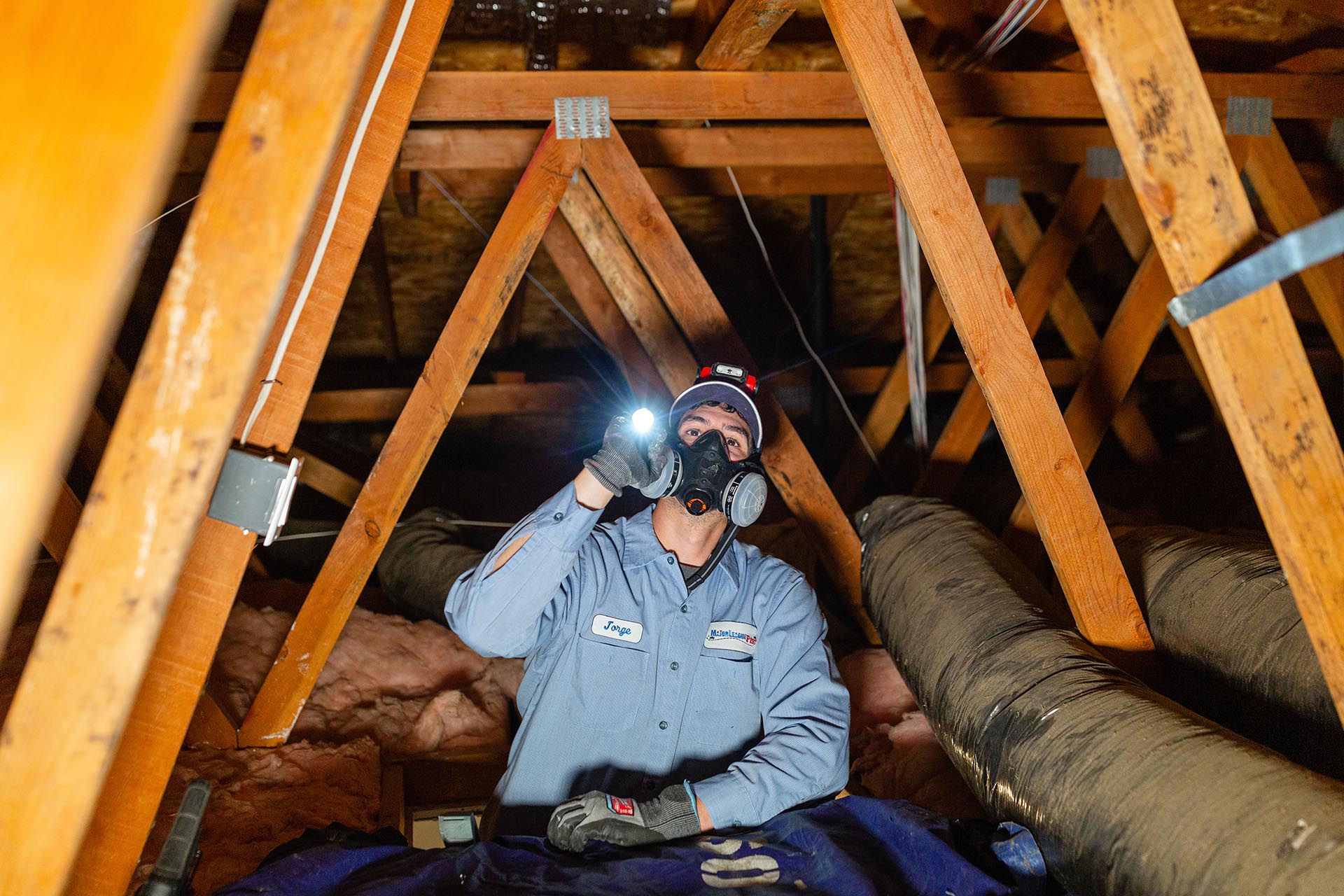
Attics are easy to forget because they are not part of the daily living space. Yet they can play a major role in how pests enter, hide, nest, and move through a home. Attic insulation does more than support comfort and energy performance. It can also reveal pest pressure, hold signs of hidden activity, and become damaged when rodents, termites, ants, cockroaches, spiders, fleas, or stinging insects find conditions that support them.
Good pest control looks at the attic as part of the whole structure. A technician is not only checking for insects or rodents. They are reading insulation condition, entry points, droppings, nesting material, moisture patterns, odors, and damage that may show how long activity has been present. When insulation is ignored, small pest issues can remain hidden until repairs become more expensive. The attic can also connect several problem areas at once, including roof gaps, wall voids, garage edges, and utility lines that pests may use without being noticed from the rooms below.
Insulation Can Hide Early Pest Activity
Pests often choose attics because they are quiet, sheltered, and less disturbed than kitchens, bedrooms, or garages. Rodents may nest in insulation, chew through materials, and leave droppings behind. Cockroaches, ants, spiders, and other insects may use voids, corners, and stored items when moisture or food sources are nearby. Termites may not live in insulation itself, but attic conditions can still reveal wood, moisture, or access concerns that deserve inspection.
Signs worth noting include:
- Droppings, urine odor, shredded insulation, or nesting material
- Tunnels, compressed areas, or disturbed insulation near beams or vents
- Scratching, movement, or chewing sounds from ceilings or wall lines
- Stains, damp spots, or musty odors that may support pest activity
- Insect activity near attic access points, eaves, soffits, or stored items
Because insulation can conceal evidence, attic inspections should be part of a long-term pest plan. This is where regular maintenance becomes valuable. Recurring inspections help catch hidden issues before pests spread into living areas or cause deeper structural concerns.
Damaged Insulation Can Make Problems Worse
Once pests disturb attic insulation, the problem can extend beyond the initial infestation. Rodents can flatten or tear insulation while building nests. Droppings and urine can create odor and sanitation concerns. Moisture can reduce insulation performance and encourage pest-friendly conditions. If entry points remain open, new pests can continue using the attic even after visible activity decreases.
Damaged insulation may contribute to:
- Reduced energy efficiency because the insulation no longer performs evenly
- Lingering odors from nesting, urine, droppings, or contaminated material
- Easier pest movement through gaps, tunnels, and hidden pathways
- More attractive shelter for rodents, insects, spiders, and stinging insects
- Greater repair needs when pest activity remains unnoticed for months
Professional evaluation matters because attic insulation problems are not always obvious from below. A small stain on a ceiling, a faint odor, or occasional noise may point to a much larger issue above. Technicians can determine whether the insulation is only disturbed, whether pests are still active, and whether exclusion, treatment, cleanup, or insulation replacement should be considered.
A one-time surface response may reduce immediate sightings, but it may not address contaminated insulation, rodent access points, or hidden movement. That is why pest control and attic assessment work best together. The goal is not only to remove the pest concern, but also to understand whether the damaged insulation will continue holding odor, debris, or shelter that encourages repeat activity.
Entry Points And Moisture Need A Closer Look
The attic often shows how pests are entering the home. Gaps around rooflines, vents, eaves, utility penetrations, soffits, and damaged screens can become access points for rodents and insects. Moisture from roof leaks, condensation, or ventilation problems can create additional pressure. When these conditions sit near insulation, pest activity can become harder to detect and easier to repeat.
A professional attic review may include:
- Checking vents, soffits, roof edges, utility lines, and access doors
- Looking for rodent gnaw marks, rub marks, droppings, or nesting areas
- Inspecting wood and structural zones for termite-related concerns
- Identifying damp insulation, poor airflow, or water-damaged materials
- Recommending exclusion, targeted treatment, repair, or follow-up inspection
Small pest problems can become expensive when ignored. This guide on a minor infestation explains why early attention matters when pests are hidden, reproducing, or damaging materials. In attic spaces, delay can affect insulation, wiring, wood, and indoor comfort.
Professional judgment helps separate old evidence from active pressure. That distinction is important because the right plan depends on whether pests are still entering, whether insulation has been compromised, and whether the attic needs cleaning or repair before long-term prevention can work. When attic insulation, exclusion, and pest service are coordinated, the home receives a stronger layer of protection from the roofline down.
Give Your Attic A Stronger Defense
Attic insulation can influence comfort, energy use, sanitation, and hidden pest activity. For expert support with attic insulation, pest control, rodents, termites, ants, fleas, cockroaches, spiders, stinging insects, and related concerns, contact Major League Pest.
