

Argentine ants range from light to dark brown and measure less than one sixteenth of an inch long. They are readily adaptable and can nest in a great variety of places. Nests are usually located in moist soil, next to or under buildings, along sidewalks, or beneath boards.
Odorous house ants are brown or black in color and measure between one sixteenth and one eighth of an inch. Usually, their nests are found under wood, debris, and landscaping, and they are known to move their colonies approximately every three months. They are attracted to moisture sources inside the home.
Pavement ants are about one eighth of an inch in length and range from light brown to black in color. They are often found nesting in the walls of buildings, under pavement stones, and in cracks in the foundation. They forage in trails up to 30 feet from their nest and will enter indoor structures for food.



Enrique, Alex and Daniel did an excellent job repairing the fascia and shade structure that were damaged by termites and dry rot.

We chose this company because of their great reviews on Google, but it’s a decision we now regret. Our experience was a huge disappointment which only caused additional and unwanted stress.
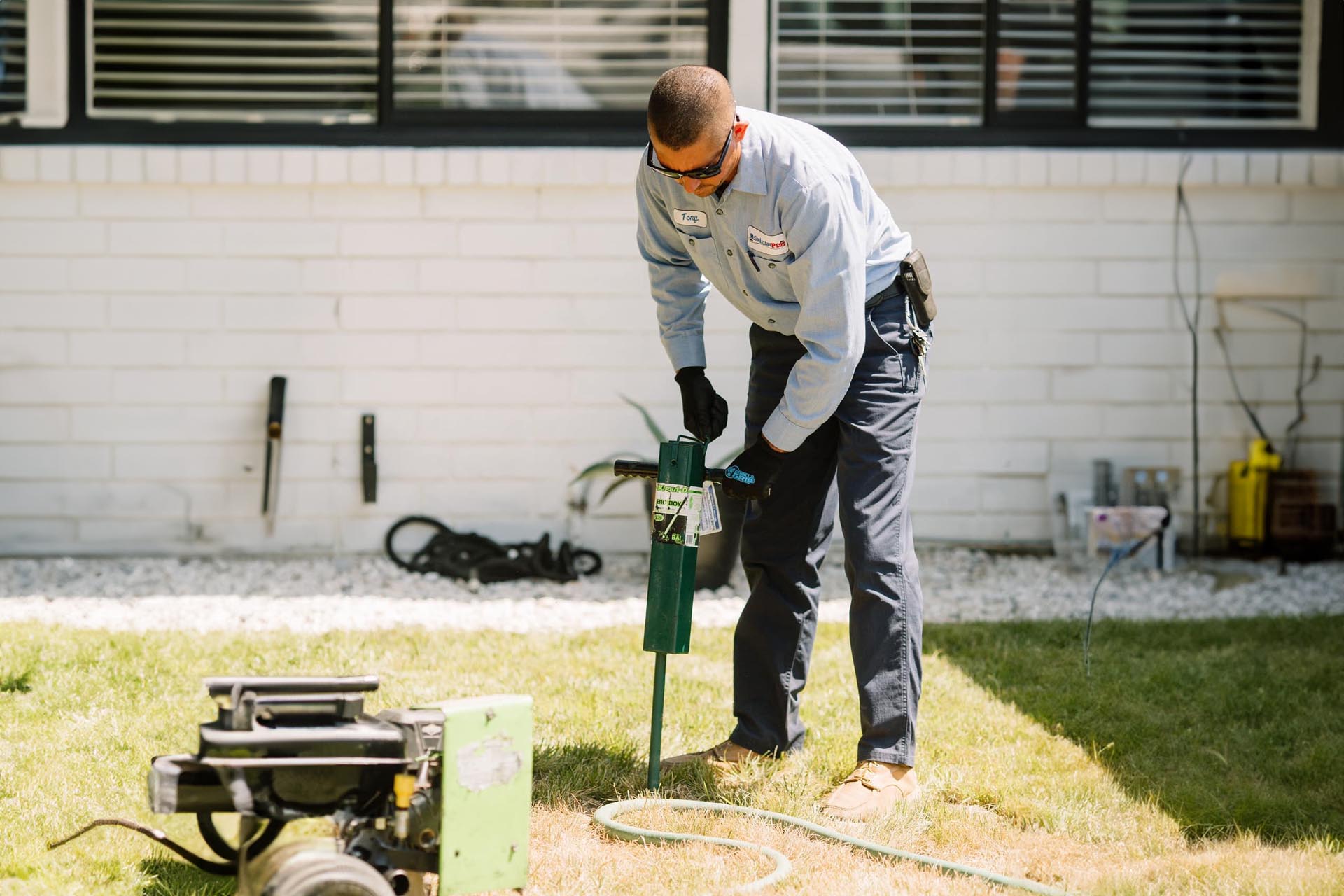
I’ve had a fantastic experience with Major League Pest Control for years! My technician, Tony, is absolutely the best—professional, knowledgeable, and always goes above and beyond.
Working with Paul was a complete breath of fresh air. I completely trust him as he went above and beyond to show me exactly what was going on and not try to oversell me on any treatment.

German cockroaches are the most common household cockroach. They are yellowish brown in color and have two dark strips on the head that run from front to back. They are typically between one half to three quarters of an inch long. They are abundant in places where there is food and water, such as kitchens and bathrooms. These insects are usually brought into a structure by grocery bags or boxes, and they breed quickly.
The Oriental cockroach looks dark brown to black with a greasy sheen and is about one inch in length. They prefer dark, damp, cooler areas such as the spaces underneath sinks and washing machines, the spaces between soil and buildings, underneath stoops, and landscape mulch. This species is of much more concern because they often travel through sewer pipes and live in filth, which they’ll track throughout your home.

Black widows are a shiny black color and commonly identified by the red hourglass marking on the underside of their abdomens. Females are larger than males and can measure up to one and a half inches in body length. They typically favor dark, secluded areas such as crevices, garages, sheds, and wood piles. Their egg sac is rounded and smooth and can be a white or tan color. Their venom is poisonous and their bites should be treated by medical professionals as quickly as possible.
Brown widows are a lighter variety of the black widow. They are the same size, measuring one and a half inches in length, but are a brown color and have an orange hourglass on the underside of their abdomen. They are less aggressive than the black widow and will typically only bite if they are poked or pried at. They are most comfortable around the underside of roof eaves, patio furniture, and swing sets. Their egg sacs are a creamy color and are round with pointed projections, making them fluffy or spiky in appearance.